
Apr 26, 2024
The Secret Language of Color
A Journey Through Perception and History
Colors
Design Thinking
Histroy
Legacy
Hey everyone, let’s talk about color! Not just any color, but the way it whispers secrets to our brains and tugs at our emotions. It’s a fascinating world called color psychology, and it’s been playing tricks on us for millennia.

Close your eyes for a moment and picture your favorite color.
Maybe it’s the calming blue of a clear sky, the energetic red of ripe berries, or the soft green of new spring leaves. Now ask yourself: why that color? What makes it resonate with you more than any other shade in the spectrum?
Colors are not just pigments reflected by light; they are silent storytellers. They whisper to our emotions, shape our decisions, and even influence how we experience time and space. Walk into a fast-food restaurant, and you’ll notice the dominance of red and yellow — shades chosen deliberately to spark appetite and energy. Open your favorite social media app, and the calming blues invite you to linger longer. From the walls of ancient tombs to the screens of our smartphones, color has been guiding human experience for thousands of years.
This fascinating interplay between color and the human mind is what we now call color psychology. But to see its full story, we need to travel back through history — across civilizations, philosophies, and scientific discoveries — to understand how humans first learned to give meaning to hues and how those meanings continue to evolve today.
Ancient Egyptians painted their tombs green to promise eternal life. Chinese emperors cloaked themselves in red to project luck and authority. Roman generals carried crimson banners into battle to inspire courage. Even in the myths we grew up with, colors weren’t arbitrary: Snow White’s innocence was coded in white, while the Evil Queen’s jealousy glimmered in poisonous green. Across cultures and centuries, color has been less about decoration and more about communication.
The journey of color doesn’t stop at symbolism. During the Renaissance, artists like Leonardo da Vinci and Michelangelo mastered the emotional potential of color, using it to stir awe, serenity, or even spiritual devotion. The Age of Enlightenment added a scientific dimension — Isaac Newton revealed that white light contained every color of the rainbow, sparking centuries of inquiry into how the human eye and brain perceive them.
Philosophers like Goethe and later Bauhaus educators like Johannes Itten expanded the discussion, linking specific hues to psychological states and artistic harmony.
By the 20th century, psychologists and researchers had begun to systematically study how color shapes behavior. Could the color of a room make people more productive? Could wearing red improve athletic performance? Could a logo’s color change whether we trust a brand? The answer to all these questions, as research has shown, is yes.
Today, color is not just a cultural symbol or artistic tool — it’s a strategic weapon. Brands carefully choose palettes to elicit trust, urgency, desire, or serenity. Hospitals paint walls in soothing blues and greens to calm patients. Tech companies lean on cool hues to suggest intelligence and innovation. Fashion, design, advertising, and even digital product interfaces all rely on the silent power of color to speak to us, often without us realizing it.
This article is a journey through that secret language — from ancient rituals to cutting-edge neuroscience, from cultural myths to corporate branding. By the end, you’ll see that color is far more than what meets the eye. It’s a bridge between perception, history, and psychology, a universal language that shapes how we feel, think, and act.

The Ancient Roots
Before scientists told us what light and color really are, people already knew they were powerful. From the green walls of Egyptian tombs to the fiery reds of Chinese festivals and the royal purple of Roman emperors — colors shaped how people lived, prayed, and even ruled.
The Ancient Roots of Color Symbolism
Long before science began dissecting light into spectrums and wavelengths, human beings instinctively understood that colors carried meaning. They weren’t just pigments; they were symbols, rituals, and sacred codes woven into the fabric of daily life. Each civilization painted its world with hues that spoke of power, divinity, fear, and hope.
Egypt: Green for Life, Gold for the Gods

In the fertile valleys along the Nile, color wasn’t decoration — it was destiny. The Egyptians believed green symbolized rebirth and regeneration. To them, the lush banks of the Nile after its annual flood were proof that life emerged from green. Tomb walls were painted with verdant hues to promise eternal life, and amulets in the shape of scarabs were often carved from green stones like malachite.
But perhaps no color was more divine than gold. Gold represented the flesh of the gods — eternal, untarnished, radiant. Pharaohs were buried in golden sarcophagi not merely for wealth, but to embody divine immortality. In temples, priests wore linen robes of pristine white, a color associated with purity and sacredness.
China: Red for Fortune, Jade for Harmony

Half a world away, in ancient China, red became the heartbeat of culture. More than just a color, it symbolized joy, prosperity, and vitality. Red was used in festivals, weddings, and New Year celebrations. Warriors painted their armor in crimson shades to summon courage, and emperors draped themselves in red silk to project authority and divine blessing.
Another revered hue was jade green. Jade was not only a stone but also a symbol of virtue, harmony, and balance. The philosopher Confucius once described jade as embodying human excellence. To the Chinese, wearing jade was not mere adornment but a spiritual safeguard, believed to protect the soul.
India: Saffron for Sacrifice, Blue for the Divine

In India, color was deeply interwoven with spirituality. Saffron, the fiery orange hue of sacred robes, represented renunciation and sacrifice. Monks and sages wrapped themselves in saffron cloth to show their detachment from material life and devotion to higher truths.
Blue, meanwhile, became the color of divinity. Hindu deities like Krishna and Vishnu were depicted with radiant blue skin, symbolizing infinity, cosmic power, and the endless sky. In art and mythology, the deep indigo of the night sky was not emptiness but a reminder of the vast, eternal presence of the divine.
Greece and Rome: Power in Red, Purity in White

In the classical world, the symbolism of color took on a political and militaristic edge. For the Greeks, color was linked to aesthetics and the balance of elements, but myths also embraced their emotional pull. Aphrodite, the goddess of love, was often draped in white or rose-tinted robes, reflecting purity and passion intertwined.
The Romans elevated this symbolism into statecraft. Red was the color of Mars, the god of war, and crimson banners accompanied legions into battle as a sign of dominance and fearlessness. Senators wore togas trimmed with a stripe of purple, a dye so rare and costly that it became the exclusive emblem of power. White, on the other hand, was linked to peace and dignity, often worn by priests and judges as a visual marker of honesty and fairness.
Color as a Universal Language
Across these civilizations, despite their differences in culture and geography, a striking truth emerges: colors carried universal weight. Green was life, red was power, white was purity, blue was transcendence. Even without contact, cultures across the globe seemed to instinctively map emotions and spiritual beliefs onto the same hues.
Colors in antiquity weren’t superficial choices. They structured rituals, guided rulers, defined identities, and even promised afterlives. They were a shared language — silent yet profound — that people understood instinctively, long before science explained why.
The Middle Ages
Color in the Middle Ages and the Renaissance- If the ancient world saw color as sacred and symbolic, the Middle Ages gave it a distinctly religious and moral dimension.
Every hue was loaded with meaning, tied to spiritual allegories and social hierarchies. And then, with the arrival of the Renaissance, color burst forth as an artistic force — not just symbolic, but deeply emotional, guiding viewers into entirely new realms of perception.
The Middle Ages: Sacred Symbolism in Stone and Glass

Walk into a Gothic cathedral, and you are immediately bathed in colored light. Stained glass windows, glowing with jewel-like reds, blues, and greens, weren’t simply decorative marvels; they were theological texts in color. For a largely illiterate population, stained glass told stories of the Bible.
Blue was the color of the Virgin Mary’s robe, representing purity, humility, and heaven. Ultramarine, the pigment used, was made from ground lapis lazuli — so expensive it was sometimes worth more than gold.
Red carried dual meaning: it symbolized both Christ’s sacrifice (blood, love, martyrdom) and sin (temptation, anger, the Devil).
Green signified rebirth and hope, often used in scenes of resurrection.
Black was linked to mourning, death, and the unknown, while white symbolized divine light and innocence.
Even garments and heraldry followed strict color codes. A noble’s colors declared allegiance and status. Religious manuscripts were illuminated with vibrant pigments that not only brought stories alive but also reminded readers of God’s radiant creation.
The Renaissance: Color as Emotion and Perspective
As Europe emerged from the medieval worldview, the Renaissance sparked a revolution in how color was perceived. Artists rediscovered the classical ideals of harmony and proportion, but now infused them with a new scientific curiosity about light, shadow, and perspective.
Leonardo da Vinci once wrote, “The first of all simple colors is white … and the last is black.” He explored how light revealed color and how subtle tonal variations could evoke mood. In the Mona Lisa, the cool greens and muted blues in the background create a sense of distance and mystery, contrasting with the warm tones of her face, which invite intimacy.
Michelangelo, meanwhile, filled the Sistine Chapel ceiling with dynamic hues: the fiery reds of God’s cloak in The Creation of Adam, the earthy browns grounding humanity, the bright blues symbolizing the heavens. His palette was both dramatic and symbolic, amplifying the tension and grandeur of biblical stories.
Titian, another Renaissance master, became renowned for his mastery of red. His portraits often used deep crimson fabrics to signal wealth, sensuality, and power. To this day, a particularly vivid pigment is called “Titian Red” in his honor.
Beyond Symbolism: The Science of Pigments
The Renaissance was not only about artistic genius; it was also about innovation in materials. Artists experimented with pigments derived from minerals, plants, and even insects. Cinnabar gave them brilliant reds, lapis lazuli brought ultramarine blues, and saffron produced golden yellows. The rarity and cost of these pigments often determined their use: ultramarine was reserved for the most sacred figures, while cheaper earth pigments filled backgrounds.
This technical progress meant that color was no longer just symbolic — it was expressive. Artists used it to create perspective, to guide the eye, to suggest atmosphere, and to move viewers emotionally.
A New Language of Vision
By the end of the Renaissance, color had transcended its medieval role as moral allegory. It had become a language of vision — a way for artists to orchestrate feelings, tell stories, and immerse audiences in new experiences.
In a sense, the Renaissance handed color back to humanity, no longer just as a divine symbol but as a human tool: a palette for creativity, perception, and emotion.
While artists and cultures had long used color as a symbolic and emotional force, the scientific study of color truly began in the 17th century. This was the turning point when color shifted from mystical association to measurable phenomenon — and eventually into the realm of psychology.
Newton and the Spectrum of Light
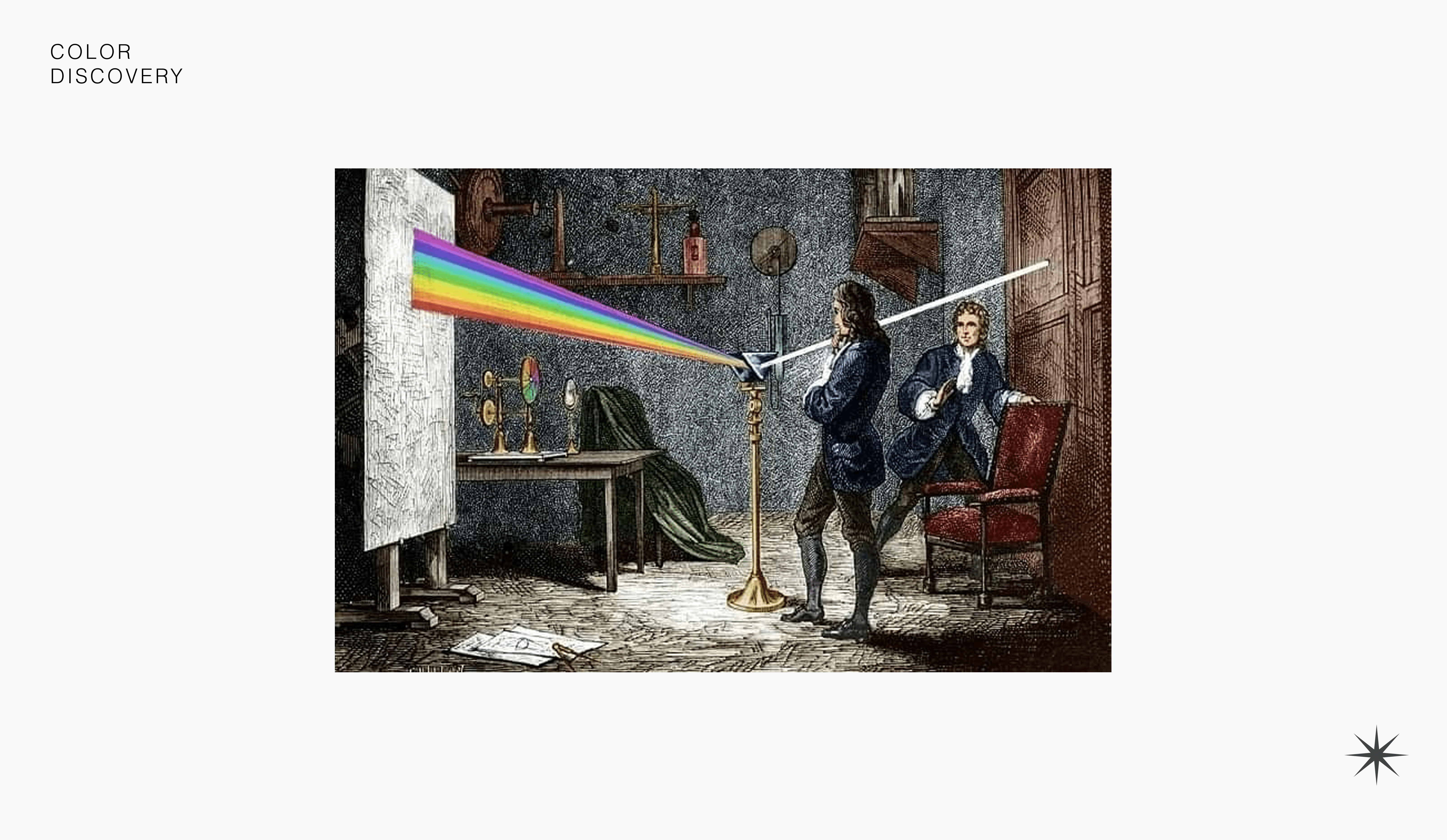
In 1666, Sir Isaac Newton conducted a simple yet groundbreaking experiment: passing a beam of sunlight through a glass prism. The light split into a rainbow of colors — proof that white light was not pure, but composed of many hues. Newton categorized these colors into a circular diagram, creating one of the first versions of the color wheel. This discovery laid the foundation for centuries of inquiry into how light and color interact with human perception.
Goethe and the Emotions of Color
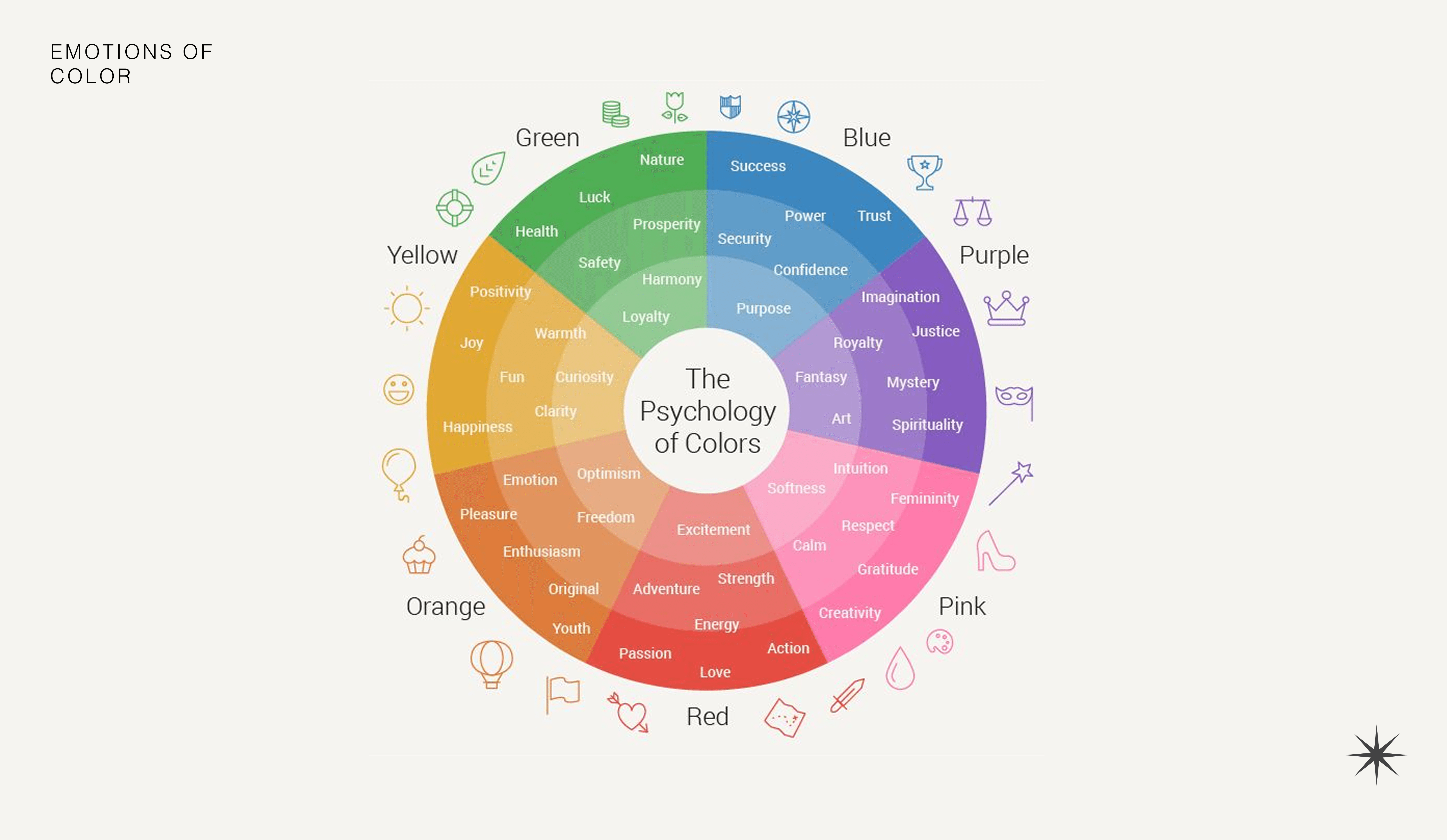
If Newton explained how color exists, Johann Wolfgang von Goethe tried to explain how we feel it. In his 1810 work, Theory of Colours, Goethe argued that colors were not just physical phenomena but also deeply psychological. He suggested that each hue triggered specific emotions:
Red evoked excitement and passion.
Blue instilled calm and introspection.
Yellow radiated warmth and cheer.
Though many of Goethe’s scientific claims were later challenged, his emphasis on the emotional resonance of color became highly influential, inspiring artists, philosophers, and eventually psychologists.
Chevreul, Itten, and the Language of Harmony
In the 19th century, French chemist Michel Eugène Chevreul introduced the law of simultaneous contrast, showing how colors affect each other when placed side by side. A blue might look more vivid next to orange, or duller next to green. This principle transformed design, textiles, and art, teaching creators how to manipulate perception through combinations of hues.
Later, at the Bauhaus school in the early 20th century, Johannes Itten formalized these ideas into a modern color wheel and a systematic theory of harmony and contrast. His teachings influenced generations of designers, embedding color psychology into architecture, painting, and eventually advertising.
Eva Heller and the Psychology of Color
By the late 20th century, color was no longer just a concern of artists and physicists — it became a subject of serious psychological research. German psychologist Eva Heller published Psychology of Colour (2000), a landmark book that combined cultural history, personal surveys, and psychology. She found that people consistently associated colors with emotions and concepts across contexts:
Blue was widely seen as trustworthy and calming.
Green signified hope, health, and nature.
Red carried both love and aggression.
Black evoked mourning, but also elegance.
Heller’s work highlighted that while meanings vary by culture, many emotional responses to color have surprising universality.
The Science of Performance and Behavior
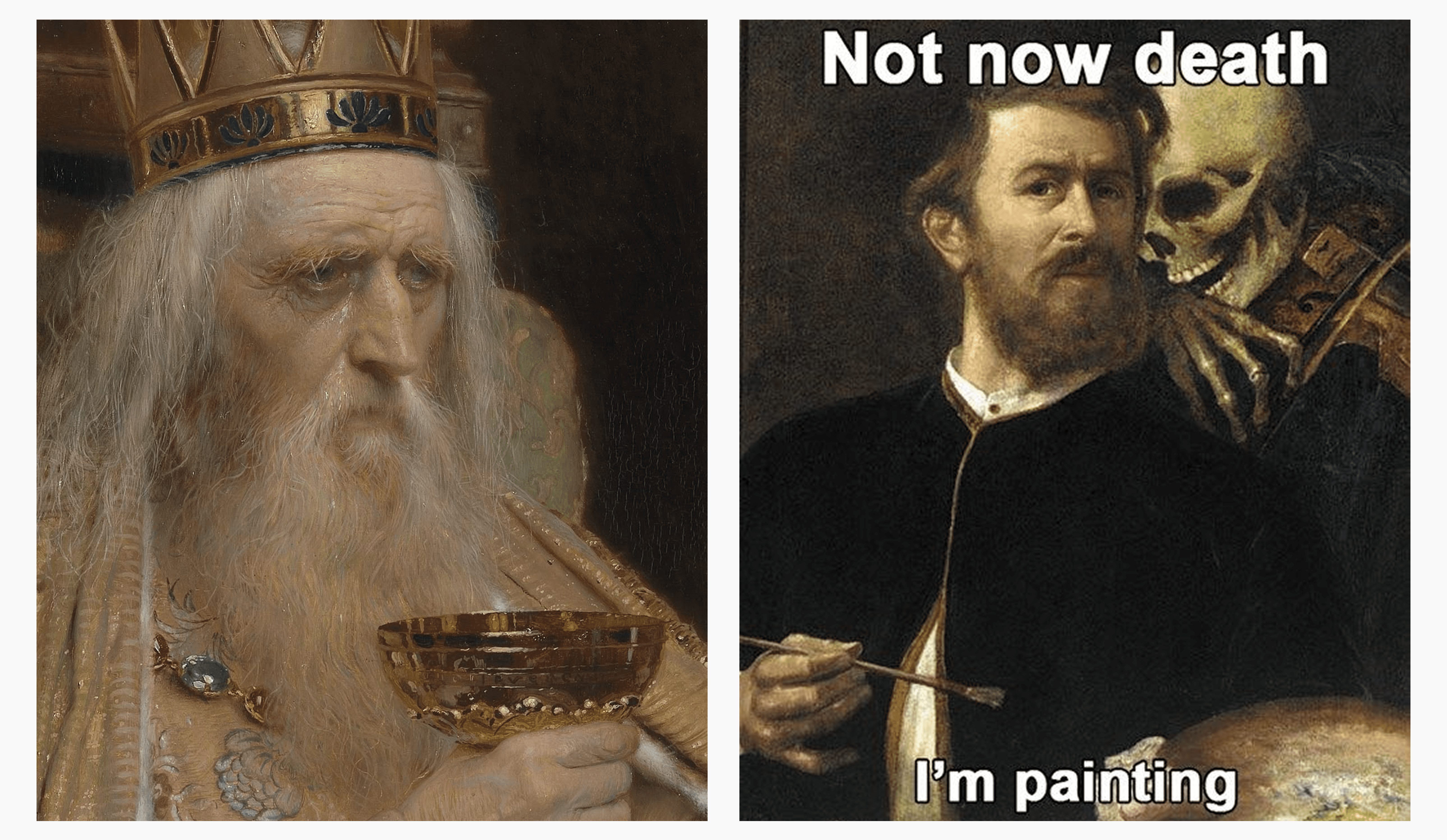
Contemporary studies have confirmed these psychological effects in measurable ways. Research by Andrew Elliot and his team at the University of Rochester revealed that red can boost physical performance — athletes shown red before a competition often perform better, possibly due to subconscious associations with dominance and power. Other studies suggest that blue environments improve focus and creativity, while green spaces reduce stress and mental fatigue.
Cross-cultural studies further complicate the picture. For instance, white is a color of purity and weddings in much of the Western world, but in parts of East Asia it symbolizes mourning. Yellow can represent happiness in Europe, but in some Latin American cultures it is tied to death. These contrasts show how deeply color meanings are tied to culture, even as certain psychological responses remain nearly universal.
From Physics to Psychology
In just a few centuries, the study of color evolved from Newton’s prism to laboratory experiments linking hues to mood, behavior, and culture. The spectrum of light had become a spectrum of meaning — shaping not just what we see, but how we feel, act, and even perform.
If science explains why color affects us, then branding and daily life show us just how powerful that influence can be. Every shade we encounter — in a logo, a room, a website, or even our clothes — quietly nudges our emotions and decisions. Companies spend millions choosing the “right” colors for their identities, while individuals instinctively reach for hues that match their moods or aspirations. In both worlds, color operates as an invisible persuader.
Why Brands Obsess Over Color
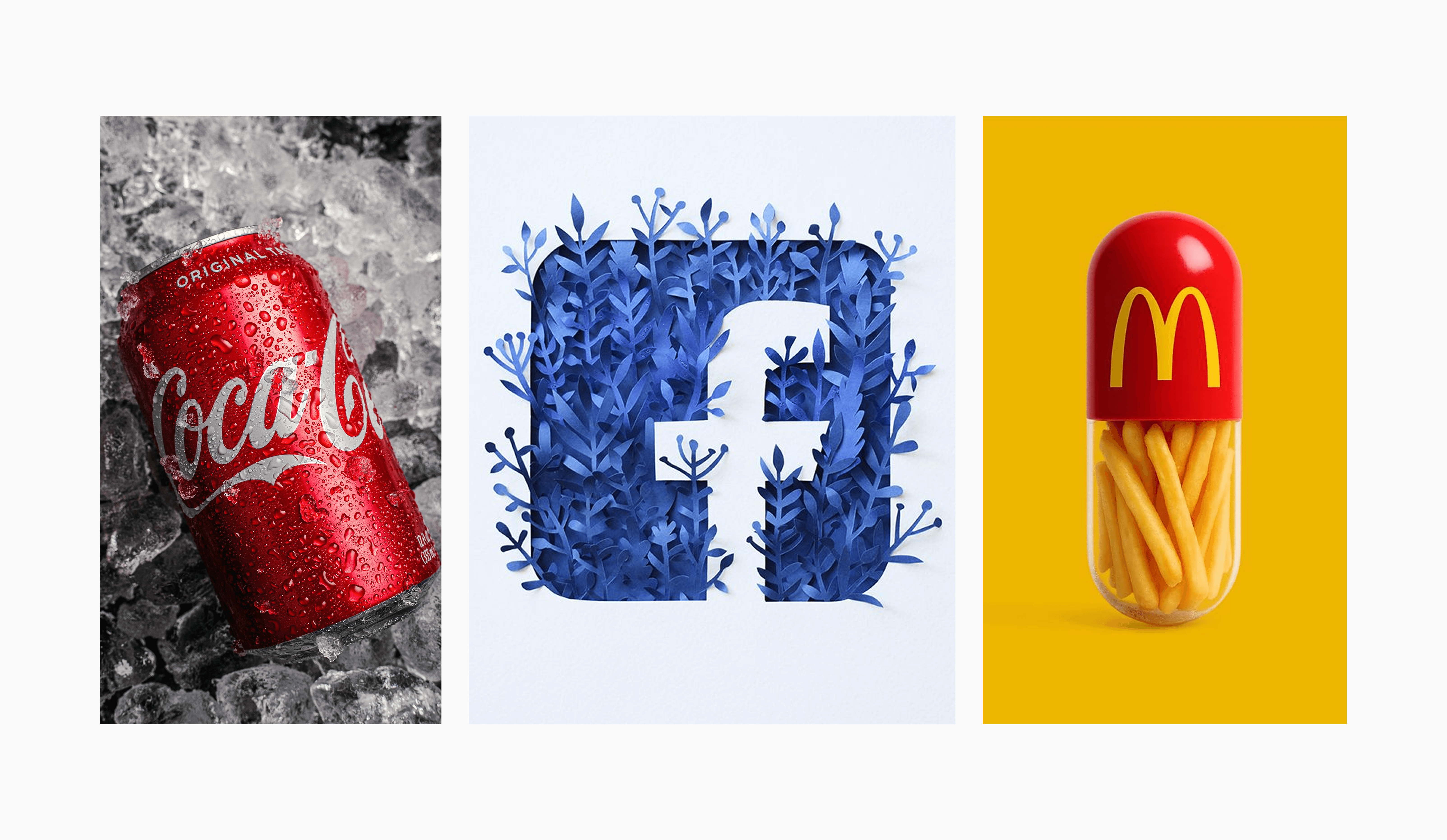
For brands, color is not decoration; it’s identity. Studies suggest that up to 80% of brand recognition comes from color alone. The right shade can signal trust, urgency, excitement, or calm before a single word is spoken.
Coca-Cola Red: Coca-Cola’s signature red wasn’t chosen at random. It conveys energy, excitement, and passion — exactly the emotions the brand wants tied to moments of refreshment and celebration.
Facebook Blue: Mark Zuckerberg famously chose blue because of his color blindness (he sees blue most vividly), but the choice had deeper benefits. Blue conveys reliability, trust, and calm — ideal for a platform asking users to share personal lives online.
McDonald’s Yellow and Red: Together, these colors are a masterclass in psychology. Red stimulates appetite and energy, while yellow sparks warmth and friendliness. Their combination makes customers hungry — and happy to eat quickly.
Industries use these cues with precision:
Luxury brands lean on black, gold, and deep purples to signal exclusivity.
Wellness and healthcare often use greens and blues for calm and healing.
Tech companies gravitate to blues and whites to project innovation and trust.
Food and beverage favor warm tones — reds, yellows, oranges — to stimulate appetite and sociability.
Color in Digital Interfaces: UX and UI Psychology

Today, color is as much about usability as emotion. A bright orange “Buy Now” button can boost conversions, while a soft blue background can make users feel calm and focused as they navigate a platform. Designers carefully consider contrasts for readability, accessibility for color-blind users, and the psychological pull of shades to guide user journeys.
A green checkmark reassures success. A red warning triggers caution. Even slight shifts in hue can make users click more, trust more, or stay longer. In short, digital color isn’t cosmetic — it’s functional psychology.
Everyday Spaces and Choices
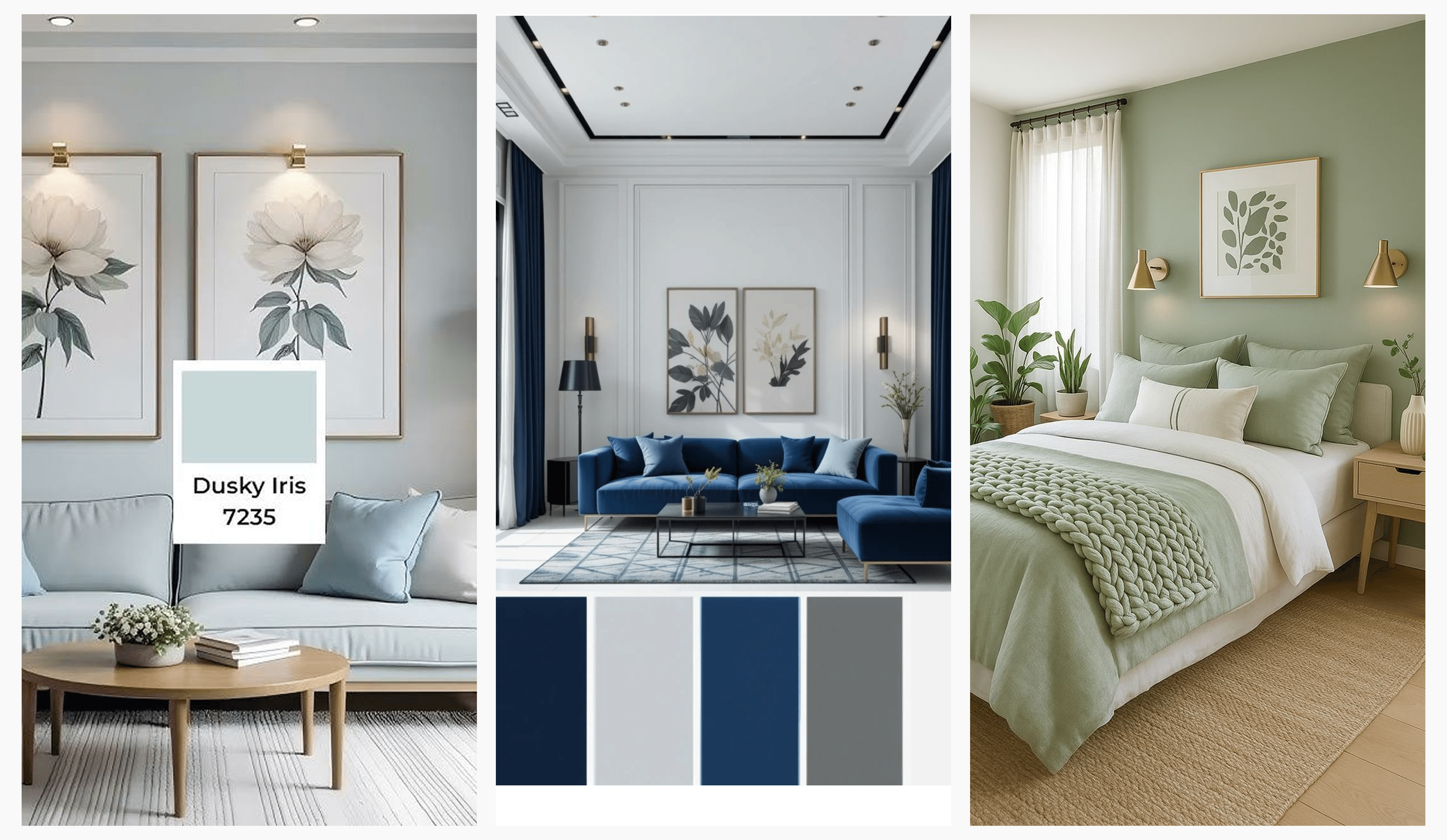
Outside the corporate world, color continues to shape how we live and feel.
Interiors: A bedroom painted in tranquil blues can encourage restful sleep, while a bright yellow kitchen feels warm and energizing. Offices with green plants and natural light reduce stress and boost productivity.
Clothing: What we wear is often a reflection of how we feel — or how we want to be perceived. Black signals sophistication and authority; red draws attention and communicates confidence; pastel tones suggest openness and friendliness.
Personal Tech & Digital Presence: Even the wallpapers we choose for our phones or the color themes on our laptops quietly reflect mood. A dark mode screen feels focused and modern; a colorful background sparks creativity.
The Hidden Influence of Color
Perhaps the most fascinating aspect of color psychology is how it affects not just emotions, but perception of time and space. Experiments have shown that:
Bright colors like yellow can make time feel as if it passes faster.
Cooler colors like blue can slow down the perception of time, making a space feel calmer.
Dark walls can make a room feel smaller and more intimate, while lighter walls open up a sense of spaciousness.
These influences operate subtly, often without our conscious awareness. Yet together, they shape the environments we live in, the choices we make, and even the memories we carry.
Color as a Constant Companion
From the red of a soda can to the soothing blue of a bedroom wall, color is with us everywhere. Companies use it to build trust and loyalty; individuals use it to express identity, set mood, or shape environments. Whether in a brand logo or a daily outfit, color becomes an extension of how we see ourselves and how the world sees us.
As we look ahead, color psychology is entering an exciting new chapter. With AI enabling personalized palettes, brands and platforms can now adapt colors to match individual preferences and moods. At the same time, neuroscience-backed studies are deepening our understanding of how colors affect cognition, behavior, and emotion on a biological level. This evolution is giving rise to dynamic branding, where companies no longer stick to one rigid identity but instead use fluid, variable color systems that shift with context and audience. Of course, this raises an ethical question: are we empowering people through thoughtful design, or subtly manipulating them?
In the end, color is more than just aesthetics—it’s culture, science, and art woven together. It holds universal meanings yet remains deeply personal. Colors shape how we feel, what we trust, and even how we remember experiences. If we pay attention, we’ll find that every shade carries a story—one that is waiting for us to listen.

Apr 26, 2024
The Secret Language of Color
A Journey Through Perception and History
Colors
Design Thinking
Histroy
Legacy
Hey everyone, let’s talk about color! Not just any color, but the way it whispers secrets to our brains and tugs at our emotions. It’s a fascinating world called color psychology, and it’s been playing tricks on us for millennia.
Close your eyes for a moment and picture your favorite color.
Maybe it’s the calming blue of a clear sky, the energetic red of ripe berries, or the soft green of new spring leaves. Now ask yourself: why that color? What makes it resonate with you more than any other shade in the spectrum?
Colors are not just pigments reflected by light; they are silent storytellers. They whisper to our emotions, shape our decisions, and even influence how we experience time and space. Walk into a fast-food restaurant, and you’ll notice the dominance of red and yellow — shades chosen deliberately to spark appetite and energy. Open your favorite social media app, and the calming blues invite you to linger longer. From the walls of ancient tombs to the screens of our smartphones, color has been guiding human experience for thousands of years.
This fascinating interplay between color and the human mind is what we now call color psychology. But to see its full story, we need to travel back through history — across civilizations, philosophies, and scientific discoveries — to understand how humans first learned to give meaning to hues and how those meanings continue to evolve today.
Ancient Egyptians painted their tombs green to promise eternal life. Chinese emperors cloaked themselves in red to project luck and authority. Roman generals carried crimson banners into battle to inspire courage. Even in the myths we grew up with, colors weren’t arbitrary: Snow White’s innocence was coded in white, while the Evil Queen’s jealousy glimmered in poisonous green. Across cultures and centuries, color has been less about decoration and more about communication.
The journey of color doesn’t stop at symbolism. During the Renaissance, artists like Leonardo da Vinci and Michelangelo mastered the emotional potential of color, using it to stir awe, serenity, or even spiritual devotion. The Age of Enlightenment added a scientific dimension — Isaac Newton revealed that white light contained every color of the rainbow, sparking centuries of inquiry into how the human eye and brain perceive them.
Philosophers like Goethe and later Bauhaus educators like Johannes Itten expanded the discussion, linking specific hues to psychological states and artistic harmony.
By the 20th century, psychologists and researchers had begun to systematically study how color shapes behavior. Could the color of a room make people more productive? Could wearing red improve athletic performance? Could a logo’s color change whether we trust a brand? The answer to all these questions, as research has shown, is yes.
Today, color is not just a cultural symbol or artistic tool — it’s a strategic weapon. Brands carefully choose palettes to elicit trust, urgency, desire, or serenity. Hospitals paint walls in soothing blues and greens to calm patients. Tech companies lean on cool hues to suggest intelligence and innovation. Fashion, design, advertising, and even digital product interfaces all rely on the silent power of color to speak to us, often without us realizing it.
This article is a journey through that secret language — from ancient rituals to cutting-edge neuroscience, from cultural myths to corporate branding. By the end, you’ll see that color is far more than what meets the eye. It’s a bridge between perception, history, and psychology, a universal language that shapes how we feel, think, and act.
The Ancient Roots
Before scientists told us what light and color really are, people already knew they were powerful. From the green walls of Egyptian tombs to the fiery reds of Chinese festivals and the royal purple of Roman emperors — colors shaped how people lived, prayed, and even ruled.
The Ancient Roots of Color Symbolism
Long before science began dissecting light into spectrums and wavelengths, human beings instinctively understood that colors carried meaning. They weren’t just pigments; they were symbols, rituals, and sacred codes woven into the fabric of daily life. Each civilization painted its world with hues that spoke of power, divinity, fear, and hope.
Egypt: Green for Life, Gold for the Gods
In the fertile valleys along the Nile, color wasn’t decoration — it was destiny. The Egyptians believed green symbolized rebirth and regeneration. To them, the lush banks of the Nile after its annual flood were proof that life emerged from green. Tomb walls were painted with verdant hues to promise eternal life, and amulets in the shape of scarabs were often carved from green stones like malachite.
But perhaps no color was more divine than gold. Gold represented the flesh of the gods — eternal, untarnished, radiant. Pharaohs were buried in golden sarcophagi not merely for wealth, but to embody divine immortality. In temples, priests wore linen robes of pristine white, a color associated with purity and sacredness.
China: Red for Fortune, Jade for Harmony
Half a world away, in ancient China, red became the heartbeat of culture. More than just a color, it symbolized joy, prosperity, and vitality. Red was used in festivals, weddings, and New Year celebrations. Warriors painted their armor in crimson shades to summon courage, and emperors draped themselves in red silk to project authority and divine blessing.
Another revered hue was jade green. Jade was not only a stone but also a symbol of virtue, harmony, and balance. The philosopher Confucius once described jade as embodying human excellence. To the Chinese, wearing jade was not mere adornment but a spiritual safeguard, believed to protect the soul.
India: Saffron for Sacrifice, Blue for the Divine
In India, color was deeply interwoven with spirituality. Saffron, the fiery orange hue of sacred robes, represented renunciation and sacrifice. Monks and sages wrapped themselves in saffron cloth to show their detachment from material life and devotion to higher truths.
Blue, meanwhile, became the color of divinity. Hindu deities like Krishna and Vishnu were depicted with radiant blue skin, symbolizing infinity, cosmic power, and the endless sky. In art and mythology, the deep indigo of the night sky was not emptiness but a reminder of the vast, eternal presence of the divine.
Greece and Rome: Power in Red, Purity in White
In the classical world, the symbolism of color took on a political and militaristic edge. For the Greeks, color was linked to aesthetics and the balance of elements, but myths also embraced their emotional pull. Aphrodite, the goddess of love, was often draped in white or rose-tinted robes, reflecting purity and passion intertwined.
The Romans elevated this symbolism into statecraft. Red was the color of Mars, the god of war, and crimson banners accompanied legions into battle as a sign of dominance and fearlessness. Senators wore togas trimmed with a stripe of purple, a dye so rare and costly that it became the exclusive emblem of power. White, on the other hand, was linked to peace and dignity, often worn by priests and judges as a visual marker of honesty and fairness.
Color as a Universal Language
Across these civilizations, despite their differences in culture and geography, a striking truth emerges: colors carried universal weight. Green was life, red was power, white was purity, blue was transcendence. Even without contact, cultures across the globe seemed to instinctively map emotions and spiritual beliefs onto the same hues.
Colors in antiquity weren’t superficial choices. They structured rituals, guided rulers, defined identities, and even promised afterlives. They were a shared language — silent yet profound — that people understood instinctively, long before science explained why.
The Middle Ages
Color in the Middle Ages and the Renaissance- If the ancient world saw color as sacred and symbolic, the Middle Ages gave it a distinctly religious and moral dimension.
Every hue was loaded with meaning, tied to spiritual allegories and social hierarchies. And then, with the arrival of the Renaissance, color burst forth as an artistic force — not just symbolic, but deeply emotional, guiding viewers into entirely new realms of perception.
The Middle Ages: Sacred Symbolism in Stone and Glass
Walk into a Gothic cathedral, and you are immediately bathed in colored light. Stained glass windows, glowing with jewel-like reds, blues, and greens, weren’t simply decorative marvels; they were theological texts in color. For a largely illiterate population, stained glass told stories of the Bible.
Blue was the color of the Virgin Mary’s robe, representing purity, humility, and heaven. Ultramarine, the pigment used, was made from ground lapis lazuli — so expensive it was sometimes worth more than gold.
Red carried dual meaning: it symbolized both Christ’s sacrifice (blood, love, martyrdom) and sin (temptation, anger, the Devil).
Green signified rebirth and hope, often used in scenes of resurrection.
Black was linked to mourning, death, and the unknown, while white symbolized divine light and innocence.
Even garments and heraldry followed strict color codes. A noble’s colors declared allegiance and status. Religious manuscripts were illuminated with vibrant pigments that not only brought stories alive but also reminded readers of God’s radiant creation.
The Renaissance: Color as Emotion and Perspective
As Europe emerged from the medieval worldview, the Renaissance sparked a revolution in how color was perceived. Artists rediscovered the classical ideals of harmony and proportion, but now infused them with a new scientific curiosity about light, shadow, and perspective.
Leonardo da Vinci once wrote, “The first of all simple colors is white … and the last is black.” He explored how light revealed color and how subtle tonal variations could evoke mood. In the Mona Lisa, the cool greens and muted blues in the background create a sense of distance and mystery, contrasting with the warm tones of her face, which invite intimacy.
Michelangelo, meanwhile, filled the Sistine Chapel ceiling with dynamic hues: the fiery reds of God’s cloak in The Creation of Adam, the earthy browns grounding humanity, the bright blues symbolizing the heavens. His palette was both dramatic and symbolic, amplifying the tension and grandeur of biblical stories.
Titian, another Renaissance master, became renowned for his mastery of red. His portraits often used deep crimson fabrics to signal wealth, sensuality, and power. To this day, a particularly vivid pigment is called “Titian Red” in his honor.
Beyond Symbolism: The Science of Pigments
The Renaissance was not only about artistic genius; it was also about innovation in materials. Artists experimented with pigments derived from minerals, plants, and even insects. Cinnabar gave them brilliant reds, lapis lazuli brought ultramarine blues, and saffron produced golden yellows. The rarity and cost of these pigments often determined their use: ultramarine was reserved for the most sacred figures, while cheaper earth pigments filled backgrounds.
This technical progress meant that color was no longer just symbolic — it was expressive. Artists used it to create perspective, to guide the eye, to suggest atmosphere, and to move viewers emotionally.
A New Language of Vision
By the end of the Renaissance, color had transcended its medieval role as moral allegory. It had become a language of vision — a way for artists to orchestrate feelings, tell stories, and immerse audiences in new experiences.
In a sense, the Renaissance handed color back to humanity, no longer just as a divine symbol but as a human tool: a palette for creativity, perception, and emotion.
While artists and cultures had long used color as a symbolic and emotional force, the scientific study of color truly began in the 17th century. This was the turning point when color shifted from mystical association to measurable phenomenon — and eventually into the realm of psychology.
Newton and the Spectrum of Light
In 1666, Sir Isaac Newton conducted a simple yet groundbreaking experiment: passing a beam of sunlight through a glass prism. The light split into a rainbow of colors — proof that white light was not pure, but composed of many hues. Newton categorized these colors into a circular diagram, creating one of the first versions of the color wheel. This discovery laid the foundation for centuries of inquiry into how light and color interact with human perception.
Goethe and the Emotions of Color
If Newton explained how color exists, Johann Wolfgang von Goethe tried to explain how we feel it. In his 1810 work, Theory of Colours, Goethe argued that colors were not just physical phenomena but also deeply psychological. He suggested that each hue triggered specific emotions:
Red evoked excitement and passion.
Blue instilled calm and introspection.
Yellow radiated warmth and cheer.
Though many of Goethe’s scientific claims were later challenged, his emphasis on the emotional resonance of color became highly influential, inspiring artists, philosophers, and eventually psychologists.
Chevreul, Itten, and the Language of Harmony
In the 19th century, French chemist Michel Eugène Chevreul introduced the law of simultaneous contrast, showing how colors affect each other when placed side by side. A blue might look more vivid next to orange, or duller next to green. This principle transformed design, textiles, and art, teaching creators how to manipulate perception through combinations of hues.
Later, at the Bauhaus school in the early 20th century, Johannes Itten formalized these ideas into a modern color wheel and a systematic theory of harmony and contrast. His teachings influenced generations of designers, embedding color psychology into architecture, painting, and eventually advertising.
Eva Heller and the Psychology of Color
By the late 20th century, color was no longer just a concern of artists and physicists — it became a subject of serious psychological research. German psychologist Eva Heller published Psychology of Colour (2000), a landmark book that combined cultural history, personal surveys, and psychology. She found that people consistently associated colors with emotions and concepts across contexts:
Blue was widely seen as trustworthy and calming.
Green signified hope, health, and nature.
Red carried both love and aggression.
Black evoked mourning, but also elegance.
Heller’s work highlighted that while meanings vary by culture, many emotional responses to color have surprising universality.
The Science of Performance and Behavior
Contemporary studies have confirmed these psychological effects in measurable ways. Research by Andrew Elliot and his team at the University of Rochester revealed that red can boost physical performance — athletes shown red before a competition often perform better, possibly due to subconscious associations with dominance and power. Other studies suggest that blue environments improve focus and creativity, while green spaces reduce stress and mental fatigue.
Cross-cultural studies further complicate the picture. For instance, white is a color of purity and weddings in much of the Western world, but in parts of East Asia it symbolizes mourning. Yellow can represent happiness in Europe, but in some Latin American cultures it is tied to death. These contrasts show how deeply color meanings are tied to culture, even as certain psychological responses remain nearly universal.
From Physics to Psychology
In just a few centuries, the study of color evolved from Newton’s prism to laboratory experiments linking hues to mood, behavior, and culture. The spectrum of light had become a spectrum of meaning — shaping not just what we see, but how we feel, act, and even perform.
If science explains why color affects us, then branding and daily life show us just how powerful that influence can be. Every shade we encounter — in a logo, a room, a website, or even our clothes — quietly nudges our emotions and decisions. Companies spend millions choosing the “right” colors for their identities, while individuals instinctively reach for hues that match their moods or aspirations. In both worlds, color operates as an invisible persuader.
Why Brands Obsess Over Color
For brands, color is not decoration; it’s identity. Studies suggest that up to 80% of brand recognition comes from color alone. The right shade can signal trust, urgency, excitement, or calm before a single word is spoken.
Coca-Cola Red: Coca-Cola’s signature red wasn’t chosen at random. It conveys energy, excitement, and passion — exactly the emotions the brand wants tied to moments of refreshment and celebration.
Facebook Blue: Mark Zuckerberg famously chose blue because of his color blindness (he sees blue most vividly), but the choice had deeper benefits. Blue conveys reliability, trust, and calm — ideal for a platform asking users to share personal lives online.
McDonald’s Yellow and Red: Together, these colors are a masterclass in psychology. Red stimulates appetite and energy, while yellow sparks warmth and friendliness. Their combination makes customers hungry — and happy to eat quickly.
Industries use these cues with precision:
Luxury brands lean on black, gold, and deep purples to signal exclusivity.
Wellness and healthcare often use greens and blues for calm and healing.
Tech companies gravitate to blues and whites to project innovation and trust.
Food and beverage favor warm tones — reds, yellows, oranges — to stimulate appetite and sociability.
Color in Digital Interfaces: UX and UI Psychology
Today, color is as much about usability as emotion. A bright orange “Buy Now” button can boost conversions, while a soft blue background can make users feel calm and focused as they navigate a platform. Designers carefully consider contrasts for readability, accessibility for color-blind users, and the psychological pull of shades to guide user journeys.
A green checkmark reassures success. A red warning triggers caution. Even slight shifts in hue can make users click more, trust more, or stay longer. In short, digital color isn’t cosmetic — it’s functional psychology.
Everyday Spaces and Choices
Outside the corporate world, color continues to shape how we live and feel.
Interiors: A bedroom painted in tranquil blues can encourage restful sleep, while a bright yellow kitchen feels warm and energizing. Offices with green plants and natural light reduce stress and boost productivity.
Clothing: What we wear is often a reflection of how we feel — or how we want to be perceived. Black signals sophistication and authority; red draws attention and communicates confidence; pastel tones suggest openness and friendliness.
Personal Tech & Digital Presence: Even the wallpapers we choose for our phones or the color themes on our laptops quietly reflect mood. A dark mode screen feels focused and modern; a colorful background sparks creativity.
The Hidden Influence of Color
Perhaps the most fascinating aspect of color psychology is how it affects not just emotions, but perception of time and space. Experiments have shown that:
Bright colors like yellow can make time feel as if it passes faster.
Cooler colors like blue can slow down the perception of time, making a space feel calmer.
Dark walls can make a room feel smaller and more intimate, while lighter walls open up a sense of spaciousness.
These influences operate subtly, often without our conscious awareness. Yet together, they shape the environments we live in, the choices we make, and even the memories we carry.
Color as a Constant Companion
From the red of a soda can to the soothing blue of a bedroom wall, color is with us everywhere. Companies use it to build trust and loyalty; individuals use it to express identity, set mood, or shape environments. Whether in a brand logo or a daily outfit, color becomes an extension of how we see ourselves and how the world sees us.
As we look ahead, color psychology is entering an exciting new chapter. With AI enabling personalized palettes, brands and platforms can now adapt colors to match individual preferences and moods. At the same time, neuroscience-backed studies are deepening our understanding of how colors affect cognition, behavior, and emotion on a biological level. This evolution is giving rise to dynamic branding, where companies no longer stick to one rigid identity but instead use fluid, variable color systems that shift with context and audience. Of course, this raises an ethical question: are we empowering people through thoughtful design, or subtly manipulating them?
In the end, color is more than just aesthetics—it’s culture, science, and art woven together. It holds universal meanings yet remains deeply personal. Colors shape how we feel, what we trust, and even how we remember experiences. If we pay attention, we’ll find that every shade carries a story—one that is waiting for us to listen.
Apr 26, 2024
The Secret Language of Color
A Journey Through Perception and History
Colors
Design Thinking
Histroy
Legacy
Hey everyone, let’s talk about color! Not just any color, but the way it whispers secrets to our brains and tugs at our emotions. It’s a fascinating world called color psychology, and it’s been playing tricks on us for millennia.
Close your eyes for a moment and picture your favorite color.
Maybe it’s the calming blue of a clear sky, the energetic red of ripe berries, or the soft green of new spring leaves. Now ask yourself: why that color? What makes it resonate with you more than any other shade in the spectrum?
Colors are not just pigments reflected by light; they are silent storytellers. They whisper to our emotions, shape our decisions, and even influence how we experience time and space. Walk into a fast-food restaurant, and you’ll notice the dominance of red and yellow — shades chosen deliberately to spark appetite and energy. Open your favorite social media app, and the calming blues invite you to linger longer. From the walls of ancient tombs to the screens of our smartphones, color has been guiding human experience for thousands of years.
This fascinating interplay between color and the human mind is what we now call color psychology. But to see its full story, we need to travel back through history — across civilizations, philosophies, and scientific discoveries — to understand how humans first learned to give meaning to hues and how those meanings continue to evolve today.
Ancient Egyptians painted their tombs green to promise eternal life. Chinese emperors cloaked themselves in red to project luck and authority. Roman generals carried crimson banners into battle to inspire courage. Even in the myths we grew up with, colors weren’t arbitrary: Snow White’s innocence was coded in white, while the Evil Queen’s jealousy glimmered in poisonous green. Across cultures and centuries, color has been less about decoration and more about communication.
The journey of color doesn’t stop at symbolism. During the Renaissance, artists like Leonardo da Vinci and Michelangelo mastered the emotional potential of color, using it to stir awe, serenity, or even spiritual devotion. The Age of Enlightenment added a scientific dimension — Isaac Newton revealed that white light contained every color of the rainbow, sparking centuries of inquiry into how the human eye and brain perceive them.
Philosophers like Goethe and later Bauhaus educators like Johannes Itten expanded the discussion, linking specific hues to psychological states and artistic harmony.
By the 20th century, psychologists and researchers had begun to systematically study how color shapes behavior. Could the color of a room make people more productive? Could wearing red improve athletic performance? Could a logo’s color change whether we trust a brand? The answer to all these questions, as research has shown, is yes.
Today, color is not just a cultural symbol or artistic tool — it’s a strategic weapon. Brands carefully choose palettes to elicit trust, urgency, desire, or serenity. Hospitals paint walls in soothing blues and greens to calm patients. Tech companies lean on cool hues to suggest intelligence and innovation. Fashion, design, advertising, and even digital product interfaces all rely on the silent power of color to speak to us, often without us realizing it.
This article is a journey through that secret language — from ancient rituals to cutting-edge neuroscience, from cultural myths to corporate branding. By the end, you’ll see that color is far more than what meets the eye. It’s a bridge between perception, history, and psychology, a universal language that shapes how we feel, think, and act.
The Ancient Roots
Before scientists told us what light and color really are, people already knew they were powerful. From the green walls of Egyptian tombs to the fiery reds of Chinese festivals and the royal purple of Roman emperors — colors shaped how people lived, prayed, and even ruled.
The Ancient Roots of Color Symbolism
Long before science began dissecting light into spectrums and wavelengths, human beings instinctively understood that colors carried meaning. They weren’t just pigments; they were symbols, rituals, and sacred codes woven into the fabric of daily life. Each civilization painted its world with hues that spoke of power, divinity, fear, and hope.
Egypt: Green for Life, Gold for the Gods
In the fertile valleys along the Nile, color wasn’t decoration — it was destiny. The Egyptians believed green symbolized rebirth and regeneration. To them, the lush banks of the Nile after its annual flood were proof that life emerged from green. Tomb walls were painted with verdant hues to promise eternal life, and amulets in the shape of scarabs were often carved from green stones like malachite.
But perhaps no color was more divine than gold. Gold represented the flesh of the gods — eternal, untarnished, radiant. Pharaohs were buried in golden sarcophagi not merely for wealth, but to embody divine immortality. In temples, priests wore linen robes of pristine white, a color associated with purity and sacredness.
China: Red for Fortune, Jade for Harmony
Half a world away, in ancient China, red became the heartbeat of culture. More than just a color, it symbolized joy, prosperity, and vitality. Red was used in festivals, weddings, and New Year celebrations. Warriors painted their armor in crimson shades to summon courage, and emperors draped themselves in red silk to project authority and divine blessing.
Another revered hue was jade green. Jade was not only a stone but also a symbol of virtue, harmony, and balance. The philosopher Confucius once described jade as embodying human excellence. To the Chinese, wearing jade was not mere adornment but a spiritual safeguard, believed to protect the soul.
India: Saffron for Sacrifice, Blue for the Divine
In India, color was deeply interwoven with spirituality. Saffron, the fiery orange hue of sacred robes, represented renunciation and sacrifice. Monks and sages wrapped themselves in saffron cloth to show their detachment from material life and devotion to higher truths.
Blue, meanwhile, became the color of divinity. Hindu deities like Krishna and Vishnu were depicted with radiant blue skin, symbolizing infinity, cosmic power, and the endless sky. In art and mythology, the deep indigo of the night sky was not emptiness but a reminder of the vast, eternal presence of the divine.
Greece and Rome: Power in Red, Purity in White
In the classical world, the symbolism of color took on a political and militaristic edge. For the Greeks, color was linked to aesthetics and the balance of elements, but myths also embraced their emotional pull. Aphrodite, the goddess of love, was often draped in white or rose-tinted robes, reflecting purity and passion intertwined.
The Romans elevated this symbolism into statecraft. Red was the color of Mars, the god of war, and crimson banners accompanied legions into battle as a sign of dominance and fearlessness. Senators wore togas trimmed with a stripe of purple, a dye so rare and costly that it became the exclusive emblem of power. White, on the other hand, was linked to peace and dignity, often worn by priests and judges as a visual marker of honesty and fairness.
Color as a Universal Language
Across these civilizations, despite their differences in culture and geography, a striking truth emerges: colors carried universal weight. Green was life, red was power, white was purity, blue was transcendence. Even without contact, cultures across the globe seemed to instinctively map emotions and spiritual beliefs onto the same hues.
Colors in antiquity weren’t superficial choices. They structured rituals, guided rulers, defined identities, and even promised afterlives. They were a shared language — silent yet profound — that people understood instinctively, long before science explained why.
The Middle Ages
Color in the Middle Ages and the Renaissance- If the ancient world saw color as sacred and symbolic, the Middle Ages gave it a distinctly religious and moral dimension.
Every hue was loaded with meaning, tied to spiritual allegories and social hierarchies. And then, with the arrival of the Renaissance, color burst forth as an artistic force — not just symbolic, but deeply emotional, guiding viewers into entirely new realms of perception.
The Middle Ages: Sacred Symbolism in Stone and Glass
Walk into a Gothic cathedral, and you are immediately bathed in colored light. Stained glass windows, glowing with jewel-like reds, blues, and greens, weren’t simply decorative marvels; they were theological texts in color. For a largely illiterate population, stained glass told stories of the Bible.
Blue was the color of the Virgin Mary’s robe, representing purity, humility, and heaven. Ultramarine, the pigment used, was made from ground lapis lazuli — so expensive it was sometimes worth more than gold.
Red carried dual meaning: it symbolized both Christ’s sacrifice (blood, love, martyrdom) and sin (temptation, anger, the Devil).
Green signified rebirth and hope, often used in scenes of resurrection.
Black was linked to mourning, death, and the unknown, while white symbolized divine light and innocence.
Even garments and heraldry followed strict color codes. A noble’s colors declared allegiance and status. Religious manuscripts were illuminated with vibrant pigments that not only brought stories alive but also reminded readers of God’s radiant creation.
The Renaissance: Color as Emotion and Perspective
As Europe emerged from the medieval worldview, the Renaissance sparked a revolution in how color was perceived. Artists rediscovered the classical ideals of harmony and proportion, but now infused them with a new scientific curiosity about light, shadow, and perspective.
Leonardo da Vinci once wrote, “The first of all simple colors is white … and the last is black.” He explored how light revealed color and how subtle tonal variations could evoke mood. In the Mona Lisa, the cool greens and muted blues in the background create a sense of distance and mystery, contrasting with the warm tones of her face, which invite intimacy.
Michelangelo, meanwhile, filled the Sistine Chapel ceiling with dynamic hues: the fiery reds of God’s cloak in The Creation of Adam, the earthy browns grounding humanity, the bright blues symbolizing the heavens. His palette was both dramatic and symbolic, amplifying the tension and grandeur of biblical stories.
Titian, another Renaissance master, became renowned for his mastery of red. His portraits often used deep crimson fabrics to signal wealth, sensuality, and power. To this day, a particularly vivid pigment is called “Titian Red” in his honor.
Beyond Symbolism: The Science of Pigments
The Renaissance was not only about artistic genius; it was also about innovation in materials. Artists experimented with pigments derived from minerals, plants, and even insects. Cinnabar gave them brilliant reds, lapis lazuli brought ultramarine blues, and saffron produced golden yellows. The rarity and cost of these pigments often determined their use: ultramarine was reserved for the most sacred figures, while cheaper earth pigments filled backgrounds.
This technical progress meant that color was no longer just symbolic — it was expressive. Artists used it to create perspective, to guide the eye, to suggest atmosphere, and to move viewers emotionally.
A New Language of Vision
By the end of the Renaissance, color had transcended its medieval role as moral allegory. It had become a language of vision — a way for artists to orchestrate feelings, tell stories, and immerse audiences in new experiences.
In a sense, the Renaissance handed color back to humanity, no longer just as a divine symbol but as a human tool: a palette for creativity, perception, and emotion.
While artists and cultures had long used color as a symbolic and emotional force, the scientific study of color truly began in the 17th century. This was the turning point when color shifted from mystical association to measurable phenomenon — and eventually into the realm of psychology.
Newton and the Spectrum of Light
In 1666, Sir Isaac Newton conducted a simple yet groundbreaking experiment: passing a beam of sunlight through a glass prism. The light split into a rainbow of colors — proof that white light was not pure, but composed of many hues. Newton categorized these colors into a circular diagram, creating one of the first versions of the color wheel. This discovery laid the foundation for centuries of inquiry into how light and color interact with human perception.
Goethe and the Emotions of Color
If Newton explained how color exists, Johann Wolfgang von Goethe tried to explain how we feel it. In his 1810 work, Theory of Colours, Goethe argued that colors were not just physical phenomena but also deeply psychological. He suggested that each hue triggered specific emotions:
Red evoked excitement and passion.
Blue instilled calm and introspection.
Yellow radiated warmth and cheer.
Though many of Goethe’s scientific claims were later challenged, his emphasis on the emotional resonance of color became highly influential, inspiring artists, philosophers, and eventually psychologists.
Chevreul, Itten, and the Language of Harmony
In the 19th century, French chemist Michel Eugène Chevreul introduced the law of simultaneous contrast, showing how colors affect each other when placed side by side. A blue might look more vivid next to orange, or duller next to green. This principle transformed design, textiles, and art, teaching creators how to manipulate perception through combinations of hues.
Later, at the Bauhaus school in the early 20th century, Johannes Itten formalized these ideas into a modern color wheel and a systematic theory of harmony and contrast. His teachings influenced generations of designers, embedding color psychology into architecture, painting, and eventually advertising.
Eva Heller and the Psychology of Color
By the late 20th century, color was no longer just a concern of artists and physicists — it became a subject of serious psychological research. German psychologist Eva Heller published Psychology of Colour (2000), a landmark book that combined cultural history, personal surveys, and psychology. She found that people consistently associated colors with emotions and concepts across contexts:
Blue was widely seen as trustworthy and calming.
Green signified hope, health, and nature.
Red carried both love and aggression.
Black evoked mourning, but also elegance.
Heller’s work highlighted that while meanings vary by culture, many emotional responses to color have surprising universality.
The Science of Performance and Behavior
Contemporary studies have confirmed these psychological effects in measurable ways. Research by Andrew Elliot and his team at the University of Rochester revealed that red can boost physical performance — athletes shown red before a competition often perform better, possibly due to subconscious associations with dominance and power. Other studies suggest that blue environments improve focus and creativity, while green spaces reduce stress and mental fatigue.
Cross-cultural studies further complicate the picture. For instance, white is a color of purity and weddings in much of the Western world, but in parts of East Asia it symbolizes mourning. Yellow can represent happiness in Europe, but in some Latin American cultures it is tied to death. These contrasts show how deeply color meanings are tied to culture, even as certain psychological responses remain nearly universal.
From Physics to Psychology
In just a few centuries, the study of color evolved from Newton’s prism to laboratory experiments linking hues to mood, behavior, and culture. The spectrum of light had become a spectrum of meaning — shaping not just what we see, but how we feel, act, and even perform.
If science explains why color affects us, then branding and daily life show us just how powerful that influence can be. Every shade we encounter — in a logo, a room, a website, or even our clothes — quietly nudges our emotions and decisions. Companies spend millions choosing the “right” colors for their identities, while individuals instinctively reach for hues that match their moods or aspirations. In both worlds, color operates as an invisible persuader.
Why Brands Obsess Over Color
For brands, color is not decoration; it’s identity. Studies suggest that up to 80% of brand recognition comes from color alone. The right shade can signal trust, urgency, excitement, or calm before a single word is spoken.
Coca-Cola Red: Coca-Cola’s signature red wasn’t chosen at random. It conveys energy, excitement, and passion — exactly the emotions the brand wants tied to moments of refreshment and celebration.
Facebook Blue: Mark Zuckerberg famously chose blue because of his color blindness (he sees blue most vividly), but the choice had deeper benefits. Blue conveys reliability, trust, and calm — ideal for a platform asking users to share personal lives online.
McDonald’s Yellow and Red: Together, these colors are a masterclass in psychology. Red stimulates appetite and energy, while yellow sparks warmth and friendliness. Their combination makes customers hungry — and happy to eat quickly.
Industries use these cues with precision:
Luxury brands lean on black, gold, and deep purples to signal exclusivity.
Wellness and healthcare often use greens and blues for calm and healing.
Tech companies gravitate to blues and whites to project innovation and trust.
Food and beverage favor warm tones — reds, yellows, oranges — to stimulate appetite and sociability.
Color in Digital Interfaces: UX and UI Psychology
Today, color is as much about usability as emotion. A bright orange “Buy Now” button can boost conversions, while a soft blue background can make users feel calm and focused as they navigate a platform. Designers carefully consider contrasts for readability, accessibility for color-blind users, and the psychological pull of shades to guide user journeys.
A green checkmark reassures success. A red warning triggers caution. Even slight shifts in hue can make users click more, trust more, or stay longer. In short, digital color isn’t cosmetic — it’s functional psychology.
Everyday Spaces and Choices
Outside the corporate world, color continues to shape how we live and feel.
Interiors: A bedroom painted in tranquil blues can encourage restful sleep, while a bright yellow kitchen feels warm and energizing. Offices with green plants and natural light reduce stress and boost productivity.
Clothing: What we wear is often a reflection of how we feel — or how we want to be perceived. Black signals sophistication and authority; red draws attention and communicates confidence; pastel tones suggest openness and friendliness.
Personal Tech & Digital Presence: Even the wallpapers we choose for our phones or the color themes on our laptops quietly reflect mood. A dark mode screen feels focused and modern; a colorful background sparks creativity.
The Hidden Influence of Color
Perhaps the most fascinating aspect of color psychology is how it affects not just emotions, but perception of time and space. Experiments have shown that:
Bright colors like yellow can make time feel as if it passes faster.
Cooler colors like blue can slow down the perception of time, making a space feel calmer.
Dark walls can make a room feel smaller and more intimate, while lighter walls open up a sense of spaciousness.
These influences operate subtly, often without our conscious awareness. Yet together, they shape the environments we live in, the choices we make, and even the memories we carry.
Color as a Constant Companion
From the red of a soda can to the soothing blue of a bedroom wall, color is with us everywhere. Companies use it to build trust and loyalty; individuals use it to express identity, set mood, or shape environments. Whether in a brand logo or a daily outfit, color becomes an extension of how we see ourselves and how the world sees us.
As we look ahead, color psychology is entering an exciting new chapter. With AI enabling personalized palettes, brands and platforms can now adapt colors to match individual preferences and moods. At the same time, neuroscience-backed studies are deepening our understanding of how colors affect cognition, behavior, and emotion on a biological level. This evolution is giving rise to dynamic branding, where companies no longer stick to one rigid identity but instead use fluid, variable color systems that shift with context and audience. Of course, this raises an ethical question: are we empowering people through thoughtful design, or subtly manipulating them?
In the end, color is more than just aesthetics—it’s culture, science, and art woven together. It holds universal meanings yet remains deeply personal. Colors shape how we feel, what we trust, and even how we remember experiences. If we pay attention, we’ll find that every shade carries a story—one that is waiting for us to listen.